Safety comes first
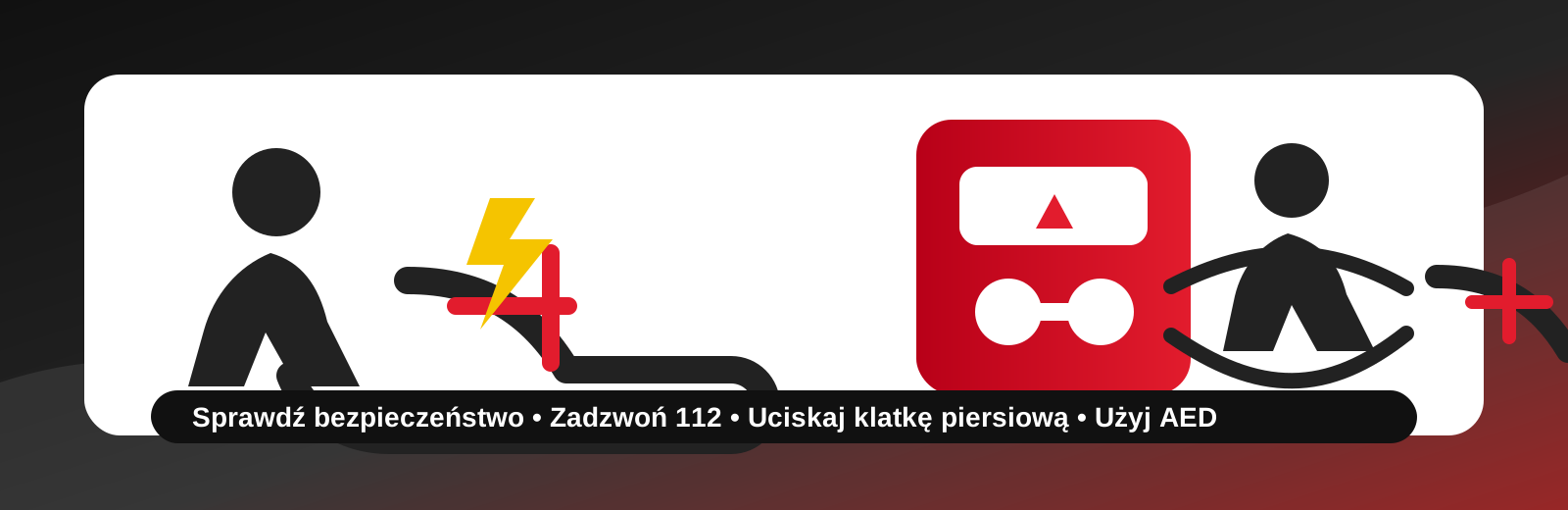
Before approaching an injured person, make sure the scene is safe. Do not put yourself or others at risk. If the danger is still present, call for help and wait in a safe place.
Call for help
In a sudden threat to life or health, call 112. Give the location, number of injured people, a short description of the situation and your details. Do not hang up until the operator ends the call.
Check response and breathing
- approach carefully and ask whether the person can hear you
- if there is no response, call loudly for help
- open the airway by gently tilting the head back
- check breathing for no more than 10 seconds
- if the person is not breathing normally, start CPR and ask for an AED if available
Adult CPR
- place the person on their back on a firm surface
- place your hands in the centre of the chest
- compress the chest about 5-6 cm deep
- compress at a rate of 100-120 per minute
- if you are trained and it is safe, use cycles of 30 compressions and 2 rescue breaths
- if you do not give rescue breaths, continue chest compressions without unnecessary pauses
- continue until emergency services arrive, normal breathing returns or you are exhausted
Child CPR
- a child is a person from about 1 year of age until puberty
- if the child is not breathing normally, start with 5 rescue breaths
- compress the lower half of the breastbone to about one third of chest depth
- if trained, use 15 compressions and 2 breaths
- if you are alone and do not have a phone with you, after about 1 minute of CPR pause briefly to call 112
- if you cannot give rescue breaths, perform chest compressions
Infant CPR
- an infant is a child under 1 year of age
- open the airway very gently without strongly tilting the head
- start with 5 gentle rescue breaths covering the infant's mouth and nose
- compress the chest with two fingers in the centre of the chest, below the nipple line
- compression depth should be about one third of chest depth
- if trained, use 15 compressions and 2 breaths
- always keep breaths gentle and adapted to the infant's small lungs
AED - how to use a defibrillator
- turn on the AED and follow the device voice prompts
- expose and dry the victim's chest
- place the pads according to the diagram on the package
- do not touch the victim during rhythm analysis or shock delivery
- return to CPR immediately when the device tells you to do so
- for children use paediatric pads if available; if not, use adult pads according to AED instructions
Recovery position
If a person is unconscious but breathing normally, place them in the recovery position and regularly check breathing until help arrives.
AED map in Mszczonów
You can search for the nearest AED on the map. Remember that AED locations and availability may change, and some devices may be inside buildings with limited opening hours.
Publicly confirmed location: AED - Defibrylator, ul. Tarczyńska 114, 96-320 Mszczonów, at the reception desk of Corning Optical Fiber Polska. Before use or before going there, confirm access to the device on site.
Remember
- call 112 when life or health is at risk
- speak calmly and answer the operator's questions
- do not be afraid to help; even simple actions can save a life
- use an AED if available and follow the device instructions
- practical first aid and AED training is the best preparation
Sources and information update
This page is based on general BLS/AED principles published by the Polish Resuscitation Council and the European Resuscitation Council. Sources: 2021 PRC/ERC resuscitation guidelines, basic life support, paediatric life support. The AED location at Tarczyńska 114 is listed in a public Targeo map entry: AED - Defibrylator, Tarczyńska 114.